
No products in the cart.

Fasteners

Fasteners and Important Parameters for Strong Assembly
Are you interested in understanding fasteners and how they impact the strength and durability of your assemblies? Whether you are working in manufacturing, 3D printing, or mechanical design, choosing the right fasteners is critical.
such as screws, bolts, nuts, and washers play a key role in holding components together.
Types
1. Screws
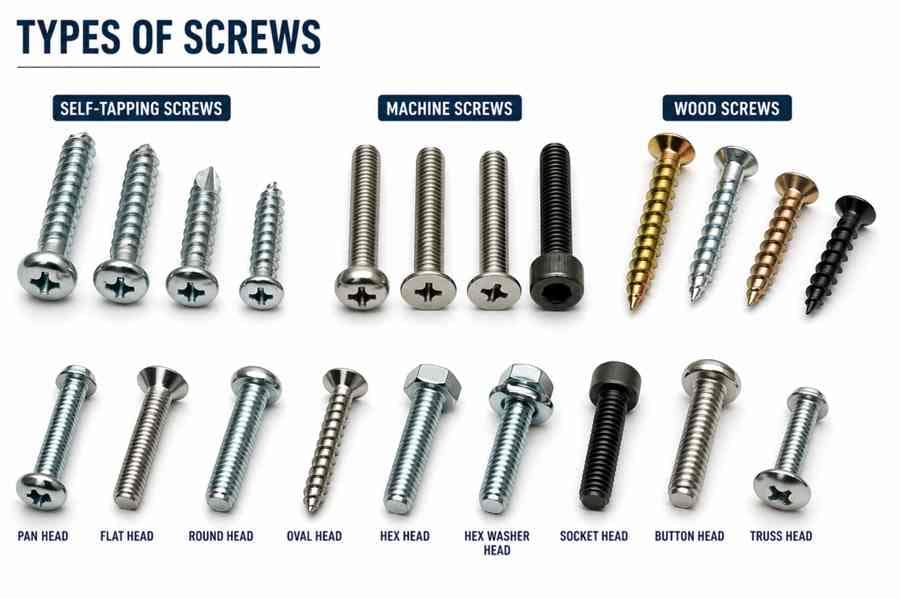
Screws are threaded fastener that are used to join materials by being driven into surfaces. They create their own grip and are commonly used in wood, plastic, and metal applications. Screws are ideal for applications where disassembly may be required.
Used for fastening materials together with threads.
Self-tapping screws
Machine screws
Wood screws
2. Bolts
Bolts are strong fastener used together with nuts to create secure and durable connections. They are widely used in heavy-duty applications such as construction, automotive, and machinery where high strength is required.
Used with nuts for strong connections.
Hex bolts
Carriage bolts
Flange bolts
3. Nuts
Nuts are internally threaded fastener that are paired with bolts to hold components together. They provide a firm locking mechanism and are essential for creating strong and stable assemblies.
Used with bolts to secure components.
Hex nuts
Lock nuts
Wing nuts
4. Washers
Washers are flat or shaped components placed between a fastener and the surface. They help distribute load evenly, reduce friction, and prevent damage to materials during tightening.
Used to distribute load and prevent damage.
Flat washers
Spring washers
Lock washers
Important Parameters of Fastener
1. Material
The material of a fastener determines its strength, corrosion resistance, and suitability for different environments. Common materials include stainless steel, carbon steel, and brass, each offering unique advantages based on application.
Fasteners are made from different materials depending on usage.
Stainless steel (corrosion-resistant)
Carbon steel (high strength)
Brass (non-magnetic)
2. Size and Diameter
The size and diameter of a fastener directly impact its load-bearing capacity and fit. Choosing the correct dimensions ensures proper fastening, prevents failure, and improves overall structural integrity.
Choosing the correct diameter ensures proper load distribution and strong fastening.
3. Thread Type
Thread type affects how a fastener grips and holds materials. Coarse threads are suitable for softer materials and faster installation, while fine threads provide better precision and stronger holding power.
Coarse threads → better for soft materials
Fine threads → better for precision
4. Strength Grade
Strength grade indicates the load capacity and durability of a fastener. Higher grades are designed for heavy-duty and high-stress applications, ensuring reliability and safety in demanding conditions.
Grade 8.8
Grade 10.9
Grade 12.9
5. Coating and Finish
Coating and surface finish protect fasteners from corrosion, wear, and environmental damage. Finishes like zinc plating, black oxide, and galvanization enhance durability and extend the lifespan of the fastener.
Zinc plated
Black oxide
Galvanized
Why Choosing the Right Matters
Prevents loosening
Improves product life
Ensures safety
Enhances performance
Source : https://itafasteners.com/11-points-to-remember-while-choosing-and-assembling-fasteners.php
