
No products in the cart.

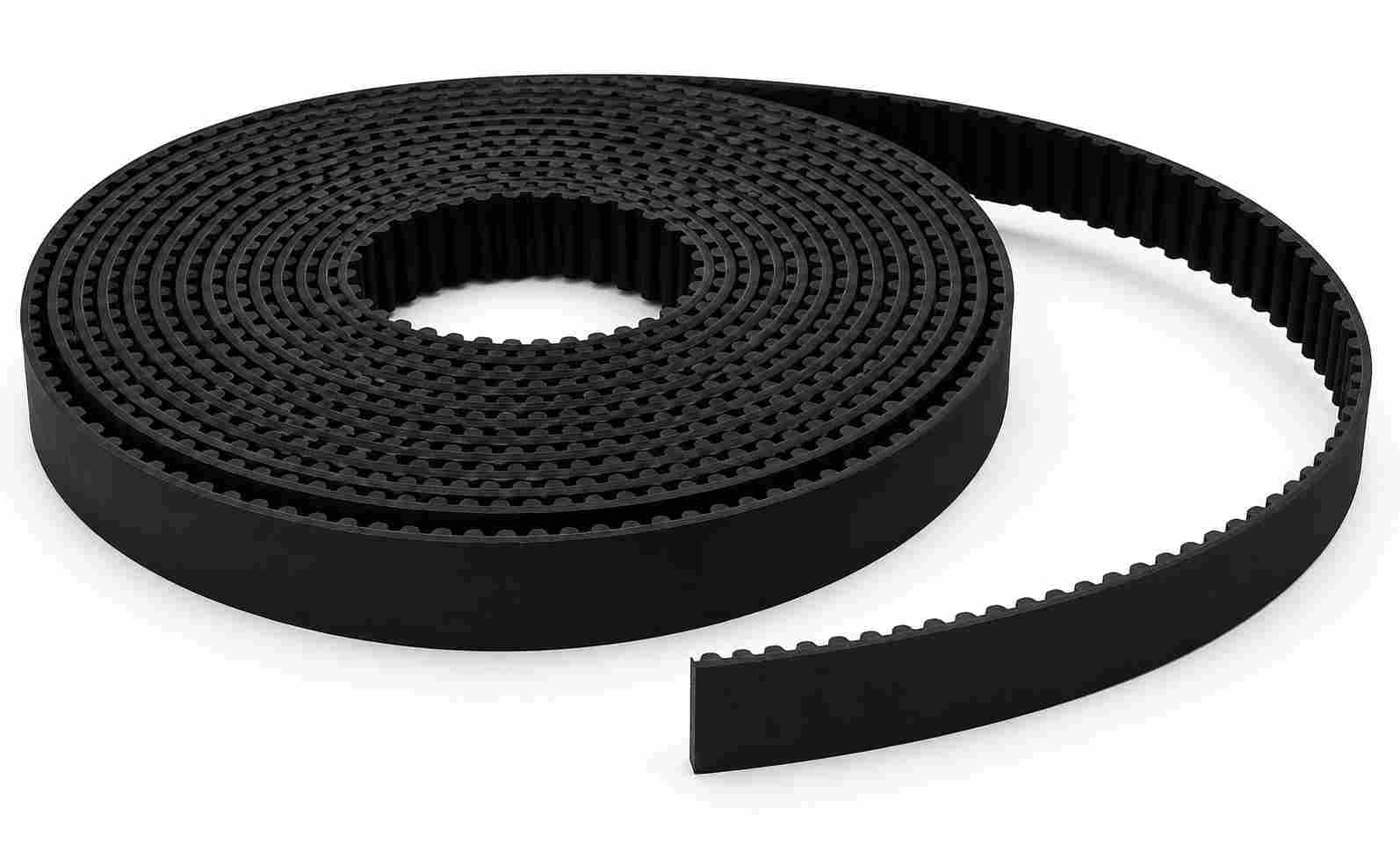
Best GT2 Timing Belt for 3D Printer
Best GT2 Timing Belt for 3D Printer
GT2 Timing Belt for 3D Printer & CNC Machines
Introduction
The GT2 timing belt has become one of the most important components used in modern 3D printers and CNC machines because of its ability to provide smooth, accurate, and reliable motion control. In every 3D printer, motion precision plays a critical role in determining print quality, dimensional accuracy, and machine performance. A high-quality GT2 timing belt helps reduce vibration, improve positioning accuracy, and ensure stable movement during high-speed printing operations.
Whether you are a professional engineer, machine manufacturer, hobbyist, or DIY builder, choosing the best GT2 timing belt can significantly improve the performance and lifespan of your 3D printer. GT2 belts are specifically designed for precision applications where consistent motion transfer is required without slipping or backlash.
What is a GT2 Timing Belt?
ABest GT2 Timing Belt for 3D Printeris a synchronous belt with a 2mm tooth pitch designed for accurate motion transmission. Unlike ordinary rubber belts, GT2 belts feature a rounded tooth profile that provides smoother interaction with pulleys. This design helps minimize backlash and ensures precise movement during operation.
Best GT2 Timing Belt for 3D Printer are commonly made from durable rubber materials reinforced with fiberglass or steel cords. These reinforcement materials increase tensile strength while maintaining flexibility, making the belt suitable for continuous high-speed operation in 3D printers and CNC systems.
Because of their precision and reliability, GT2 timing belts are widely used in:
3D Printers
CNC Machines
Laser Engraving Systems
Robotics
Motion Control Equipment
DIY Automation Projects
Importance of GT2 Timing Belts in 3D Printing
In a 3D printer, the movement of the print head and build platform depends heavily on timing belts. Even small inconsistencies in motion can lead to layer shifting, ghosting, vibration, and poor print quality. GT2 timing belts are specifically engineered to eliminate these issues by delivering smooth and synchronized movement.
A high-quality GT2 belt allows the stepper motor to transfer motion efficiently without losing positioning accuracy. This results in cleaner layer lines, sharper edges, and improved overall print precision. Modern high-speed 3D printers rely on GT2 timing belts because they can handle rapid acceleration and directional changes while maintaining stability.
Benefits of Using GT2 Timing Belt
High Precision Motion Control
GT2 timing belts are designed for precision movement. Their tooth profile ensures accurate synchronization between pulleys and motors, reducing positioning errors during printing.
Reduced Backlash
Backlash is a common issue in motion systems that causes slight movement delays and inaccuracies. GT2 belts reduce backlash significantly, improving print consistency and dimensional accuracy.
Smooth and Quiet Operation
Compared to standard belts, GT2 timing belts operate with less friction and vibration. This results in quieter machine performance and smoother printing operations.
Excellent Durability
Premium GT2 timing belts are reinforced with fiberglass or steel cores that resist stretching and wear. This ensures long-term reliability even in demanding industrial environments.
High-Speed Performance
GT2 belts are ideal for modern high-speed 3D printers because they maintain stable motion during rapid acceleration and fast printing speeds.
Easy Installation
GT2 timing belts are flexible and easy to install on most popular 3D printers and CNC machines. They can also be cut to custom lengths based on machine requirements.
Materials Used in GT2 Timing Belts
The quality of materials used in a GT2 timing belt directly affects performance and durability. Most high-performance GT2 belts are manufactured using synthetic rubber combined with reinforced tensile cords.
Rubber Construction
The outer layer is usually made from high-quality neoprene or synthetic rubber that provides flexibility, wear resistance, and long operational life.
Fiberglass Reinforcement
Fiberglass cords are commonly used to improve tensile strength and reduce stretching. This helps maintain belt tension over long periods of operation.
Steel Core Reinforcement
Some industrial GT2 belts use steel reinforcement for additional strength in heavy-duty applications where higher loads are involved.
Compatibility with 3D Printers
GT2 timing belts are compatible with many popular 3D printer models and motion systems. They are commonly used in:
Creality Ender 3
Ender 5
CR-10 Series
Prusa i3
Anycubic Printers
CoreXY Machines
Delta Printers
DIY 3D Printers
Their universal compatibility makes them one of the most preferred timing belts in the 3D printing industry.
Choosing the Best GT2 Timing Belt
Selecting the right GT2 timing belt is important for achieving reliable and accurate machine performance. Several factors should be considered before purchasing.
Belt Width
Common GT2 belt widths include 6mm and 10mm. Wider belts generally provide better stability and load capacity for larger machines.
Reinforcement Type
Fiberglass reinforcement is suitable for most standard 3D printers, while steel reinforcement is ideal for industrial and heavy-duty applications.
Tooth Accuracy
High-quality belts have accurately molded teeth that ensure smooth pulley engagement and reduce motion errors.
Durability
A premium GT2 timing belt should resist stretching, cracking, and wear during long-term operation.
Applications Beyond 3D Printing
Although GT2 timing belts are widely known for 3D printers, they are also used in many industrial and automation systems. Their precise motion transfer capabilities make them suitable for:
CNC Routers
Laser Cutting Machines
Packaging Equipment
Robotics Systems
Industrial Automation
Conveyor Systems
Their versatility and reliability have made them essential components in modern mechanical systems.
Maintenance Tips for GT2 Timing Belts
Proper maintenance helps maximize the lifespan and performance of GT2 timing belts.
Maintain proper belt tension
Avoid over-tightening
Regularly inspect for wear and damage
Keep pulleys aligned correctly
Remove dust and debris from the belt surface
Routine maintenance ensures smooth operation and reduces the risk of unexpected machine failures.
GT2 Belt Width Comparison
Belt Width | Recommended Use | Advantages |
|---|---|---|
6mm GT2 Belt | Standard 3D Printers | Lightweight, Flexible, Accurate |
10mm GT2 Belt | Large CNC Machines | Higher Stability & Load Capacity |
12mm GT2 Belt | Industrial Automation | Maximum Strength & Durability |
Source : https://ekswhyzee.com/2019/04/09/gt2-belt-rotary-cad.html
Uses of GT2 Belt
High Precision Motion Control
One of the biggest advantages of GT2 timing belts is their ability to provide highly accurate motion control. The precise tooth profile ensures smooth synchronization between the belt and pulley, resulting in better print accuracy and cleaner layer alignment.
Reduced Backlash
Backlash occurs when there is slight movement loss between mechanical components. GT2 timing belts are engineered to minimize backlash, improving positional accuracy and reducing print defects caused by motion inconsistencies.
Smooth and Quiet Operation
GT2 belts operate with lower friction and vibration compared to standard timing belts. This helps reduce machine noise and improves overall printing smoothness, especially during high-speed operations.
Excellent Durability
High-quality GT2 timing belts are reinforced with fiberglass or steel cords that resist stretching and wear. This ensures long-lasting performance and reduced maintenance requirements.
Improved Print Quality
A stable and accurate motion system directly impacts print quality. GT2 timing belts help produce smoother surfaces, sharper details, and more precise dimensional accuracy in printed objects.
Compatibility with Multiple Machines
GT2 timing belts are widely compatible with popular 3D printers, CNC routers, laser engraving machines, and robotics systems, making them highly versatile for various applications.

